





















Table of Contents
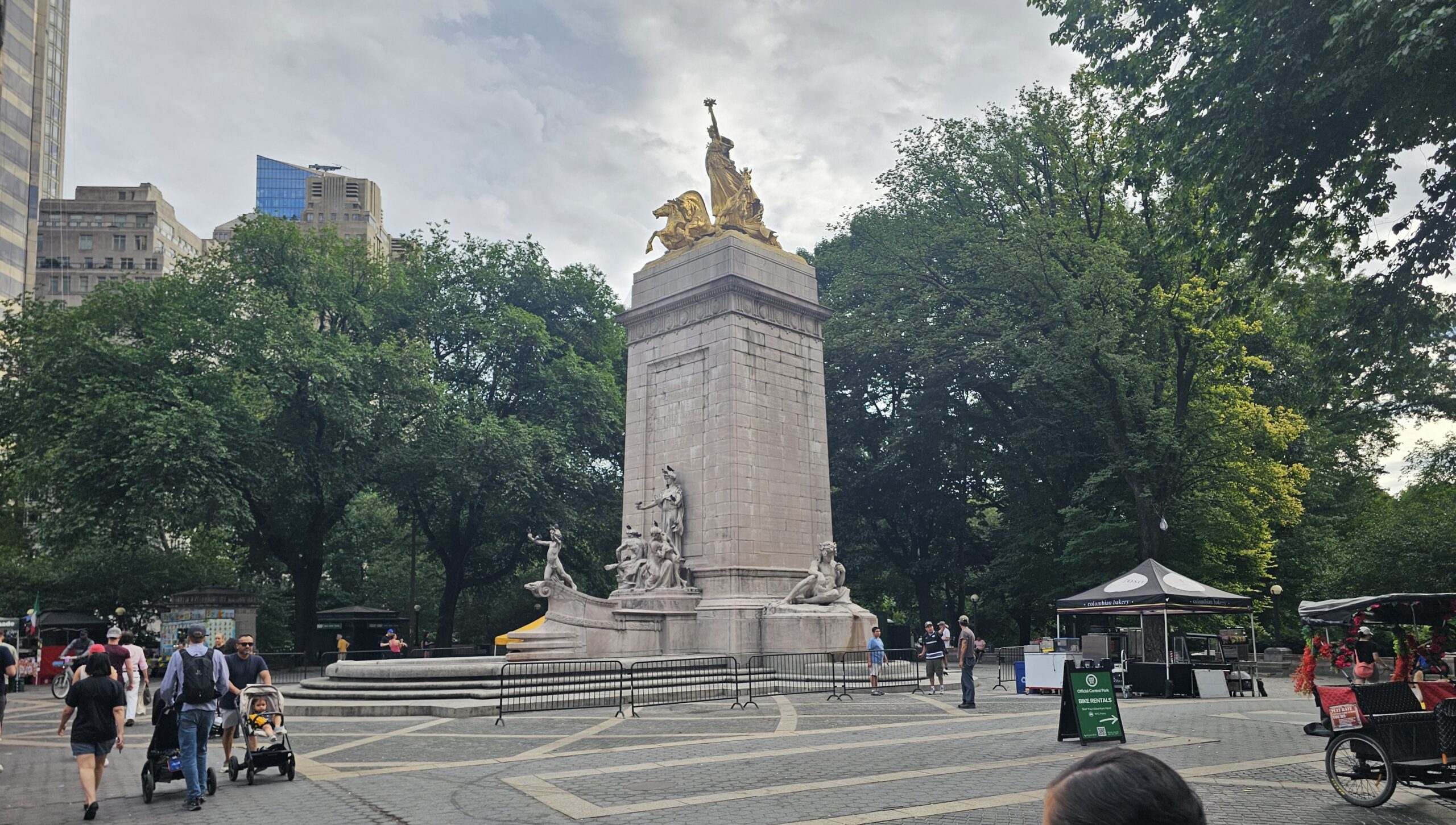
Standing tall at the northeastern edge of Columbus Circle, where Central Park South meets 8th Avenue, the USS Maine National Monument is one of New York City’s most historically significant — yet often overlooked — landmarks. Visitors rushing into Central Park frequently pass it without a second glance, unaware of the powerful story it tells about American naval history, sacrifice, and the dawn of the Spanish-American War.

Whether you’re a history buff, a photography enthusiast, or simply a curious tourist, this monument deserves your full attention.

The History Behind the Monument
On the night of February 15, 1898, the U.S. Navy battleship USS Maine mysteriously exploded in Havana Harbor, Cuba, killing 266 American sailors. The disaster inflamed American public opinion and served as a rallying cry — ‘Remember the Maine!’ — that propelled the United States into the Spanish-American War of 1898.
In the years that followed, New York City sought to honor the fallen sailors with a lasting memorial. After years of planning and fundraising, the monument was completed and dedicated on Memorial Day, May 30, 1913 — fifteen years after the tragedy.
The explosion of the USS Maine remains one of history’s
great mysteries. While the U.S. Navy initially blamed a
Spanish mine, later investigations suggested an internal
accident may have caused the blast. Regardless of the
cause, the disaster changed American history forever,
pushing the nation into the Spanish-American War and
establishing the United States as a major world power.
The monument stands today as a reminder of the 266
sailors who never returned home.Learn more about the monument’s official history at the
NYC Parks Department website.

Design & Symbolism
The monument is a masterpiece of Beaux-Arts sculpture, rich in allegorical meaning. Designed by architect H. Van Buren Magonigle and carved by sculptor Attilio Piccirilli, every detail was intentional:
- A 44-foot marble pedestal provides a grand base, visible from across Columbus Circle
- A 16.5-foot gilded bronze sculpture crowns the top, gleaming against the NYC skyline
- Allegorical figures on the pedestal represent American naval power and the ideals of the era
- The overall design reflects the Beaux-Arts movement popular in early 20th-century America

How to Visit: Getting There
By Subway (Fastest Option)
- 59 St–Columbus Circle Station: Take the A, B, C, D, or 1 train
- Exit: Follow signs for Central Park South or Columbus Circle — the monument sits directly outside on the park side
- Alternative: N, Q, R, or W to 57 St–7 Av, then walk two blocks north
By Bus
- M5, M7, M10, or M20: Get off at W 58 St/Broadway or Columbus Circle stops
- M57 or M31: Get off at 8th Ave/W 57 St and walk two blocks north
Photography & Visitor Tips
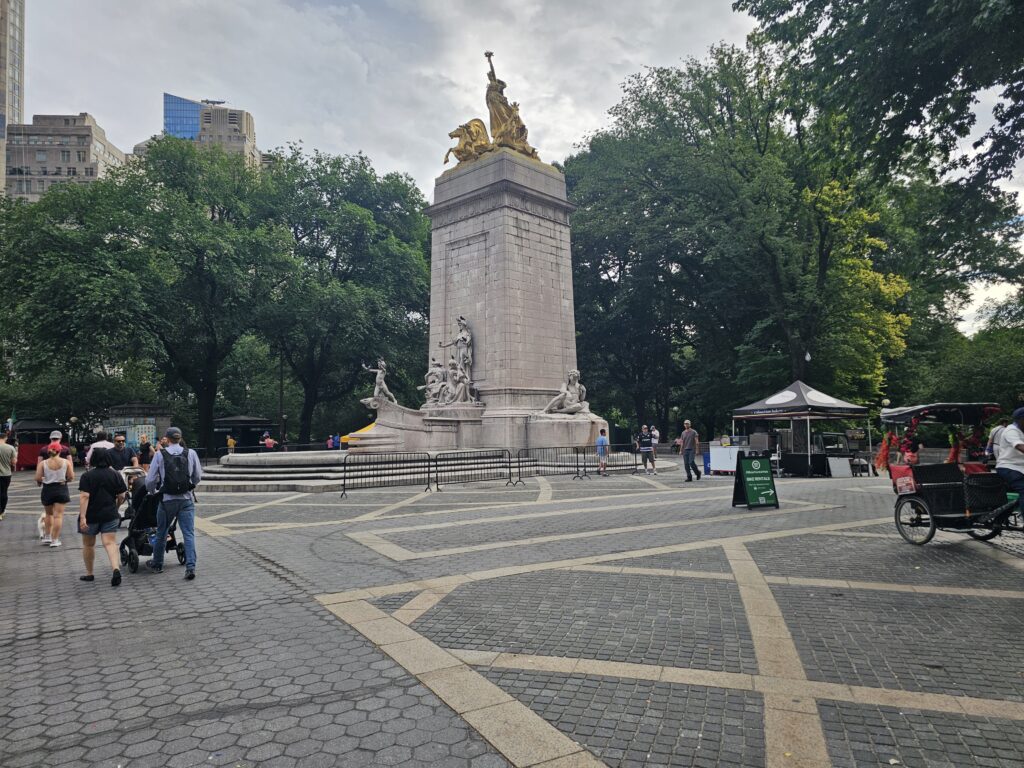
- Best time to photograph: Early morning (7–9am) for golden light and fewer crowds
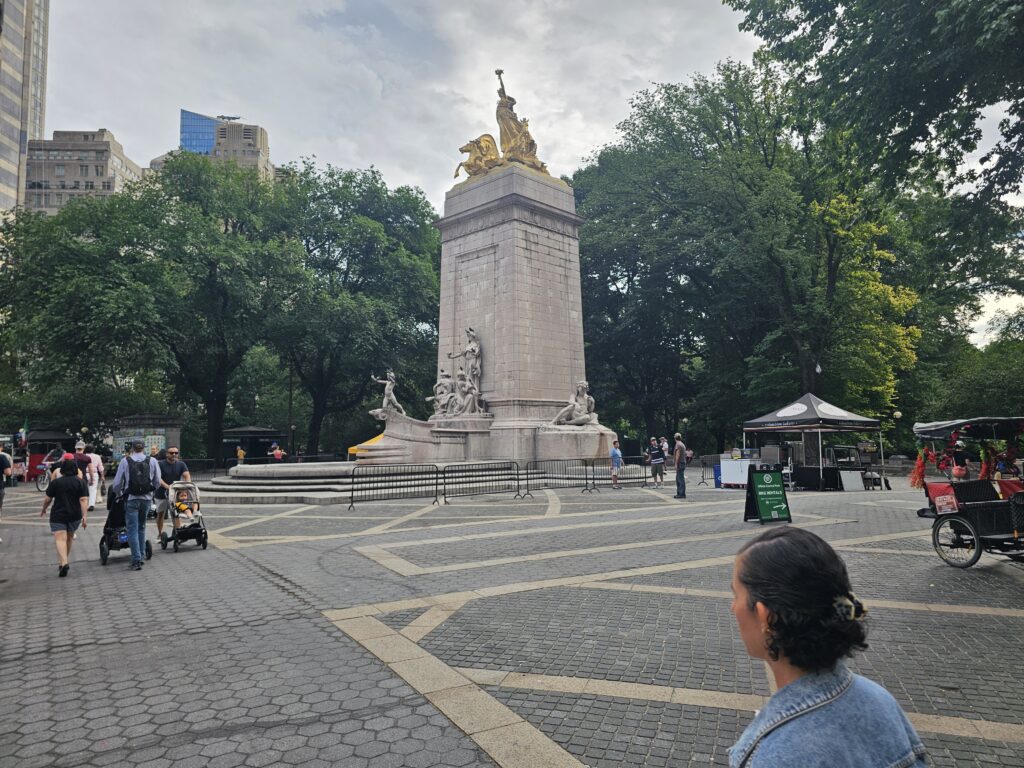
- The monument is especially striking from across Columbus Circle, where you can capture it with the NYC skyline
- Visit at dusk when the gilded bronze catches warm light beautifully
- The monument is free to visit and accessible 24/7
- Combine your visit with a walk into Central Park through the Merchant’s Gate — one of the park’s most scenic entrances
What’s Nearby
- Central Park: Enter directly through Merchant’s Gate
- Columbus Circle: Shopping, dining, and the Time Warner Center are steps away
- Lincoln Center: 10-minute walk north for world-class arts
- The Museum of Arts & Design: Directly on Columbus Circle
- Looking for more NYC attractions? Check out our complete
- guide to Bryant Park NYC.



















Comments 1