









Table of Contents
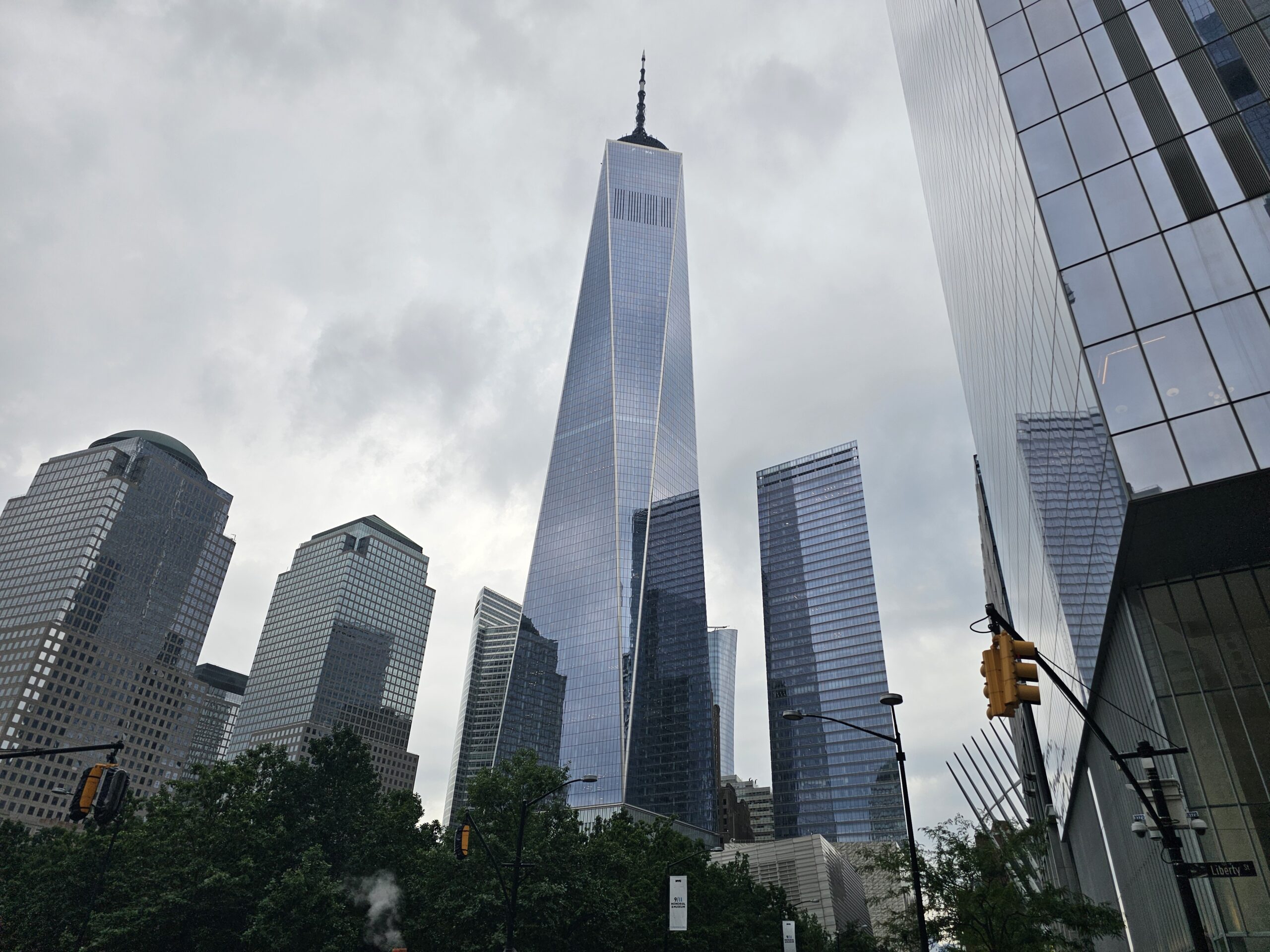
The National September 11 Memorial, often referred to simply as the reflecting pools, is a site of deep historical and emotional significance located in Lower Manhattan, New York City. Every year, more than 12 million visitors walk through this plaza to stand at the edge of the two massive pools and reflect on a single, unforgettable morning in American history.

Unlike most landmarks in Manhattan, the memorial was never designed to be photographed from a distance. It was built to be experienced up close, in silence, with water and names and open sky doing the work that words cannot.
The History and Design of the National September 11 Memorial
The memorial, titled “Reflecting Absence,” was designed by architect Michael Arad and landscape architect Peter Walker, selected from more than 5,000 submissions in an international design competition. Their winning concept turned the most devastating site in the city’s modern history into a place built around absence itself, rather than around a single monument or statue.
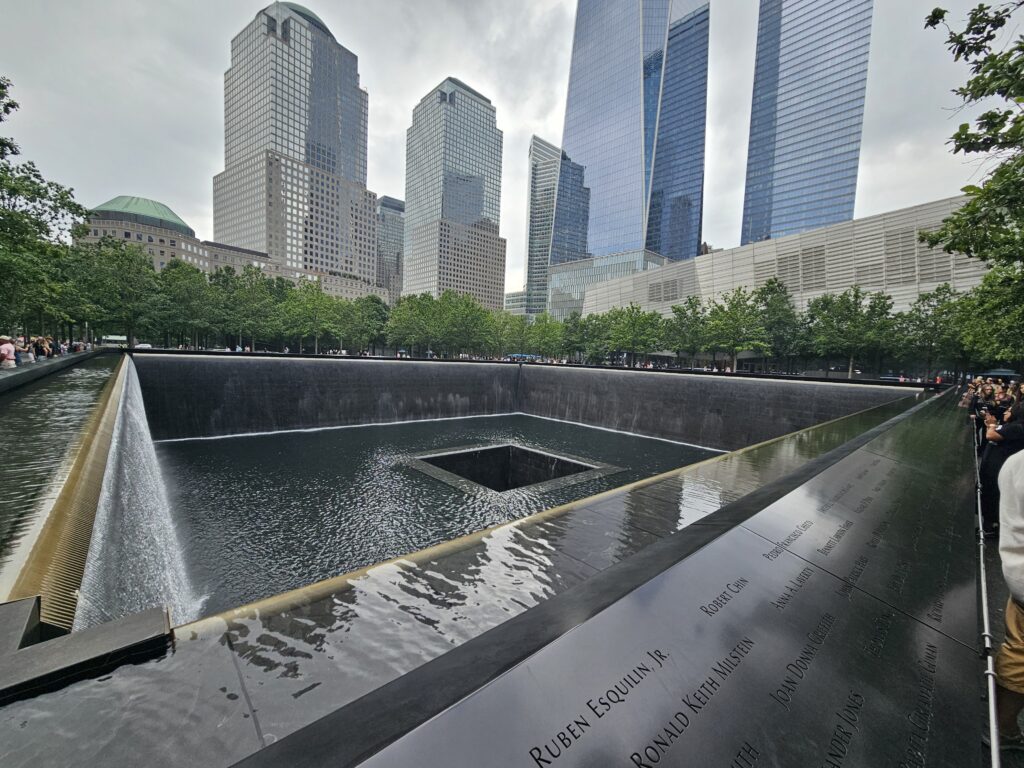
The twin reflecting pools, each nearly an acre in size, are situated precisely within the footprints of the original North and South towers of the World Trade Center. Standing at the railing, a visitor is looking directly down into the exact space where each tower once stood.
Water cascades roughly 30 feet down the granite sides into a central void that can never be filled — a design choice meant to symbolize an absence made permanently visible. Learn more about the design and construction of the pools on the official National September 11 Memorial & Museum site, which also details how the pools became the largest manmade waterfalls in North America.
The Bronze Parapets and the Names of the Fallen
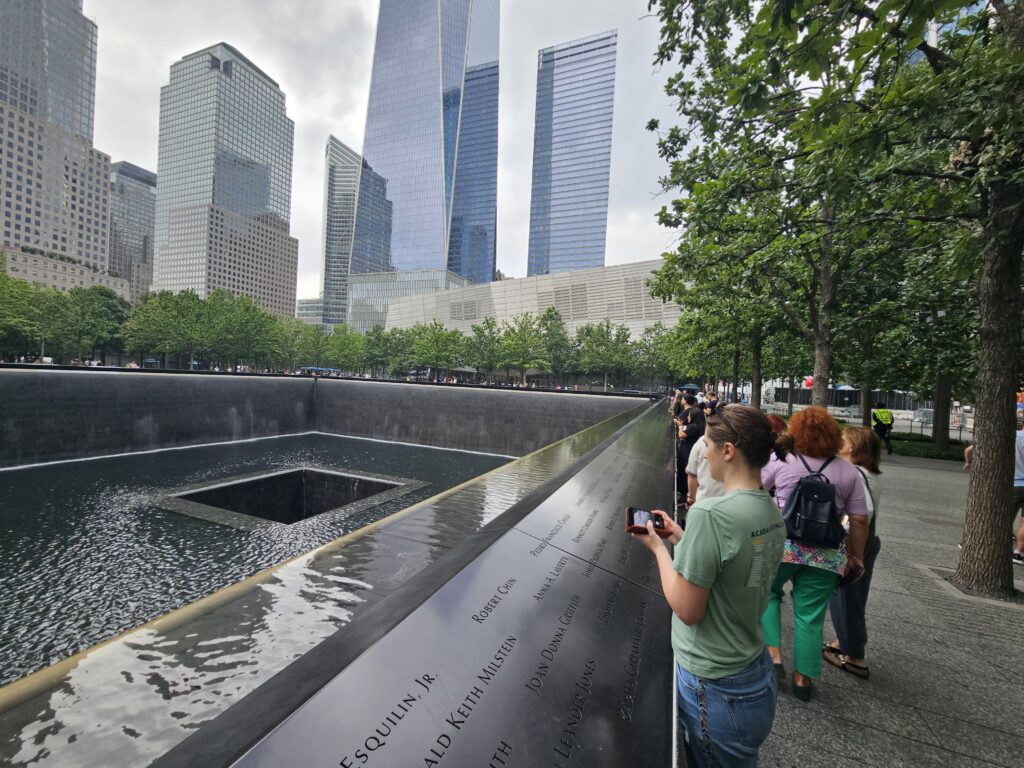
Bronze parapets surrounding both pools are inscribed with the names of the 2,983 victims of the September 11, 2001 attacks and the February 26, 1993 World Trade Center bombing. Names are arranged not alphabetically, but by “meaningful adjacency,” grouping together colleagues, first responder companies, and loved ones who were together that day, at the request of victims’ families.
Visitors often leave white roses tucked into the engraved letters on what would have been a victim’s birthday, a tradition maintained by memorial staff. Walking the full perimeter of both pools and reading the names is, for many, the most powerful part of the entire visit.
The Survivor Tree: A Living Symbol of Resilience
On the memorial plaza stands a Callery pear tree known as the Survivor Tree. It was recovered severely damaged from the rubble of Ground Zero in the fall of 2001, nursed back to health at a New York City park nursery, and returned to the plaza in 2010 as a living symbol of resilience.
Each year, seedlings grown from the Survivor Tree are gifted to communities around the country that have endured tragedy, extending its symbolism far beyond Lower Manhattan. It remains one of the few living things on the plaza that predates the memorial itself.
Why the National September 11 Memorial Is Important to Visit
For many visitors, the memorial plaza offers a rare space in New York City built entirely for quiet contemplation — a striking contrast to the noise and pace of the surrounding Financial District.
The site is widely considered sacred ground, representing the transformation of a place of tragedy into one of hope, healing, and remembrance. It also serves an educational purpose, giving younger generations who did not live through the attacks a tangible way to understand their scale and impact.
How to Get to the National September 11 Memorial
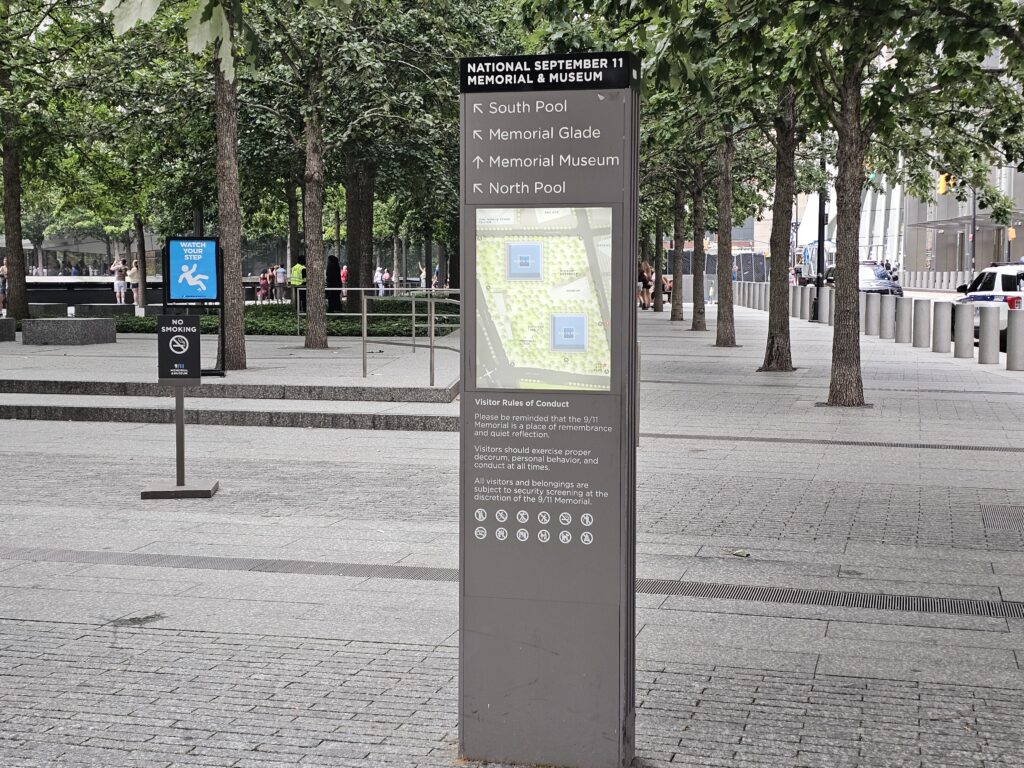
The memorial is located at the World Trade Center site in Lower Manhattan and is one of the easiest landmarks in the city to reach by public transportation.
Subway: E line to World Trade Center; 1 line to WTC Cortlandt; R line to Cortlandt St; and the A, C, J, Z, 2, 3, 4, or 5 lines to Fulton Street.
PATH Train: Riders coming from New Jersey can take the PATH train directly to the World Trade Center terminal, which sits just beneath the memorial plaza.
Bus: M55 southbound to Broadway and Thames St, M20 southbound to South End Ave, or M22 to Vesey St.
Ferry: Regular ferry service connects Lower Manhattan to Midtown, New Jersey, Brooklyn, Queens, and Staten Island.
If You Go
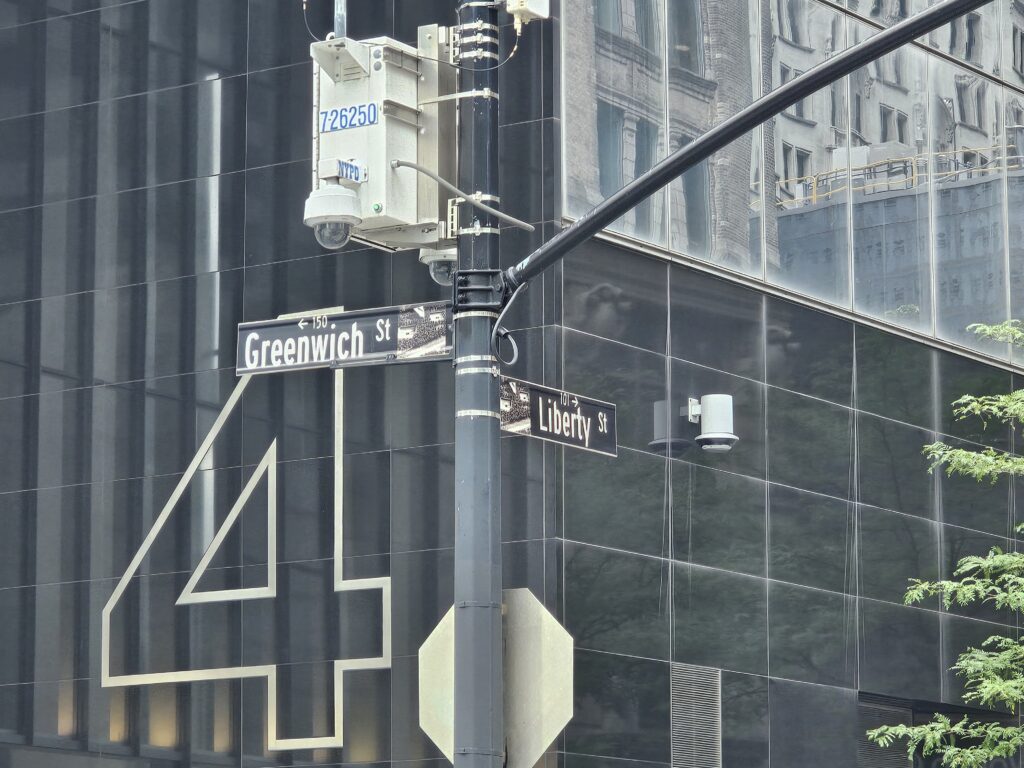
Address: 180 Greenwich Street, New York, NY 10007
Memorial Plaza Hours: Daily, 9:00 AM – 8:00 PM. The memorial plaza is free and open to the public; the adjoining museum requires a separate timed-entry ticket.
Insider Tip: Visit on a weekday morning for the smallest crowds, or return in the early evening when the plaza lights come on and the pace slows considerably. Bring a valid ID if you plan to also tour the museum, and allow at least 30–45 minutes just for the memorial plaza itself.














Comments 1